AI and the Socratic method
Plato's Socratic dialogues, written almost two and a half thousand years ago, are conversations between Socrates and his fellow Athenians. Socrates, who claimed to know nothing, pursued his personal quest for knowledge, asking questions of anyone he thought could help him. In every encounter Socrates is thwarted. His questions, though, reveal glaring holes in the knowledge of those he questioned.
Socrates had some strange ideas concerning the source of knowledge. He believed things were not learnt, but recalled from our past lives. To demonstrate his point, Socrates (in the dialogue Meno) chose to question a slave boy with little education. In answering Socrates' questions the boy is able to correctly find the square root of eight, a difficult question and something the boy clearly did not know before the conversation started. Socrates' method was to only ask questions. He established the boy could speak Greek and could count, and that the boy was able to answer that a four-foot square has a side two feet long.
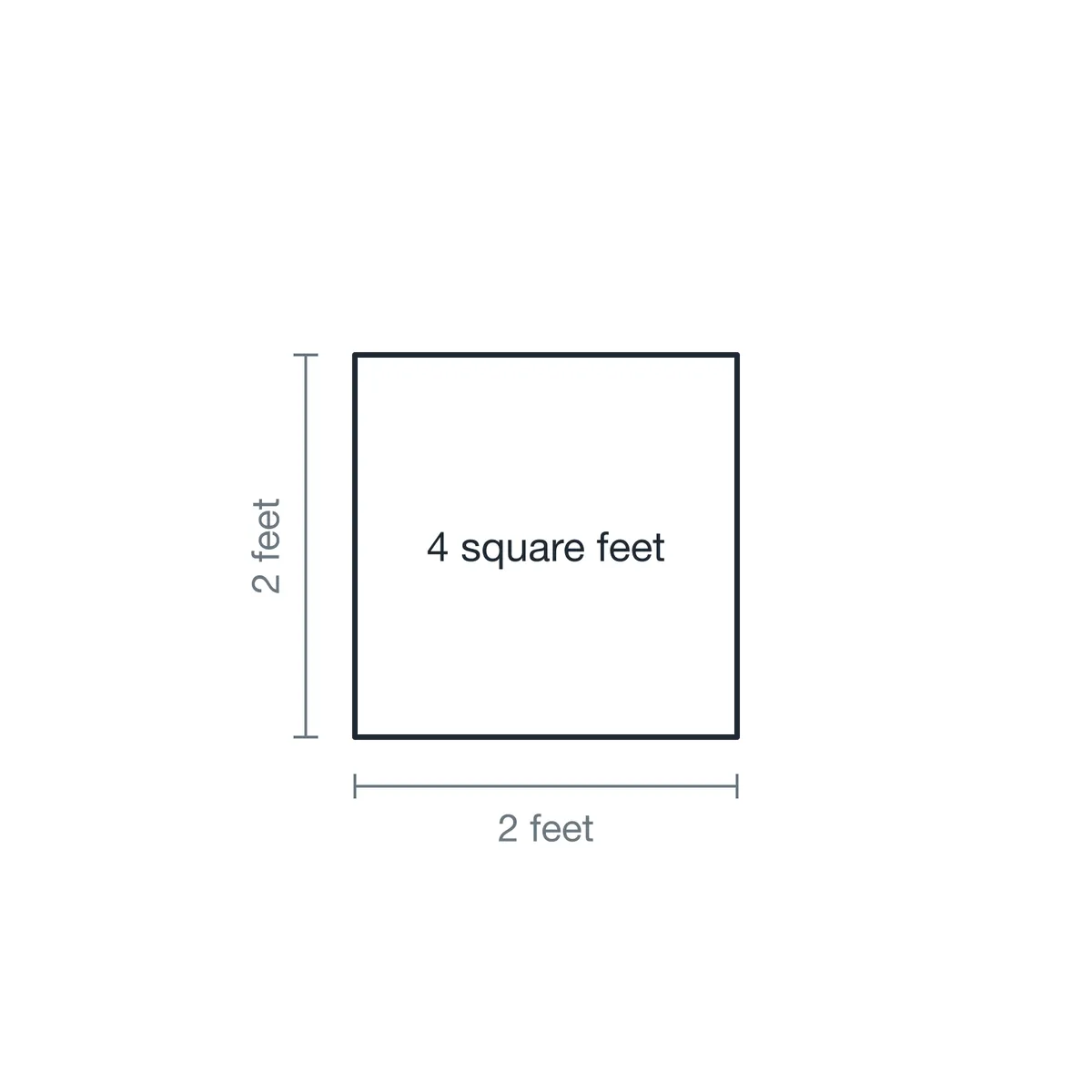
Socrates then pushes his new student to tell him how long is the side of a square that is twice as large, an eight-foot square? The boy assumes that given the square is twice as large as the previous one, its side must also be twice as large, so four feet (two plus two is four), a mistake that the boy realises when Socrates asks him to calculate the size of a square whose side is four (sixteen).
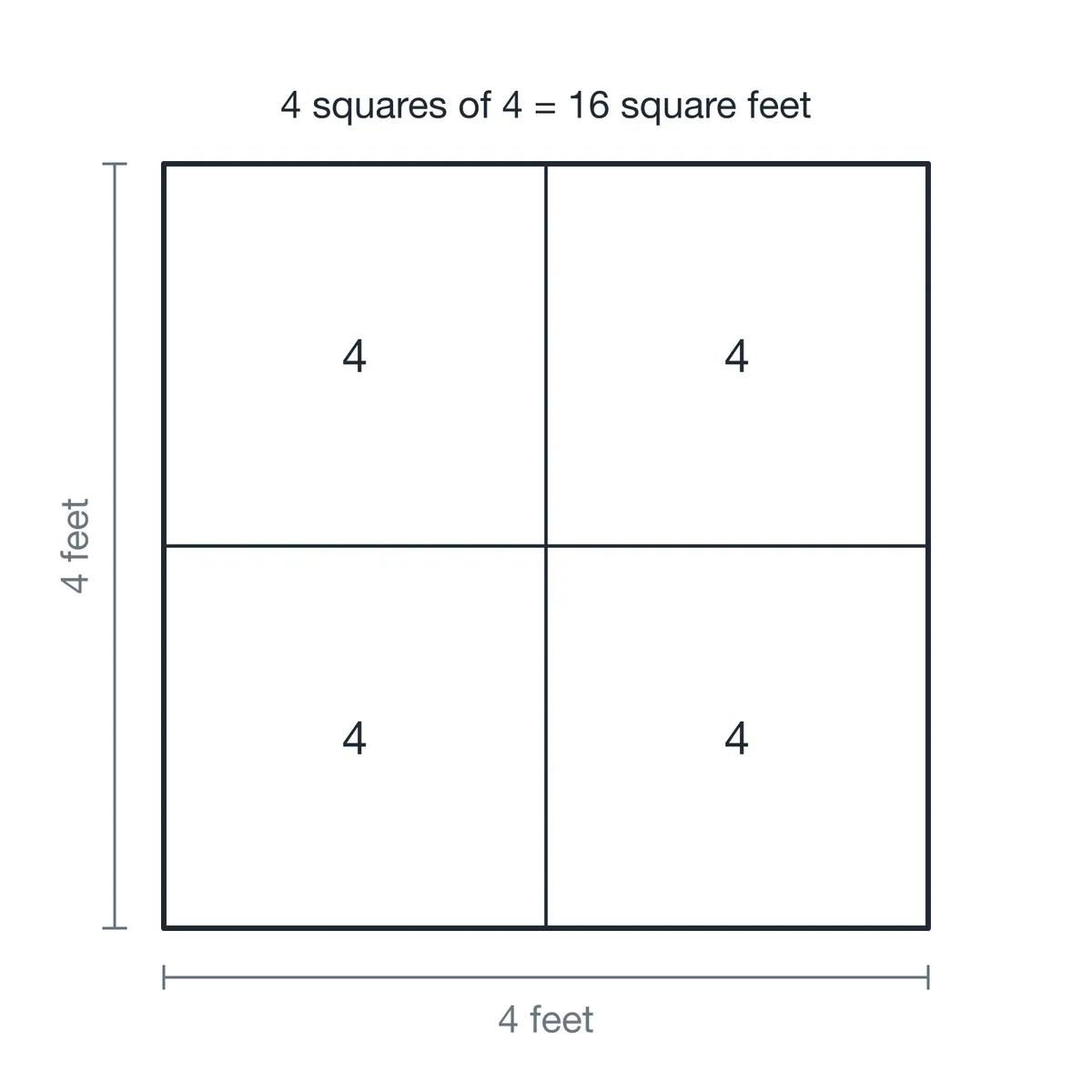
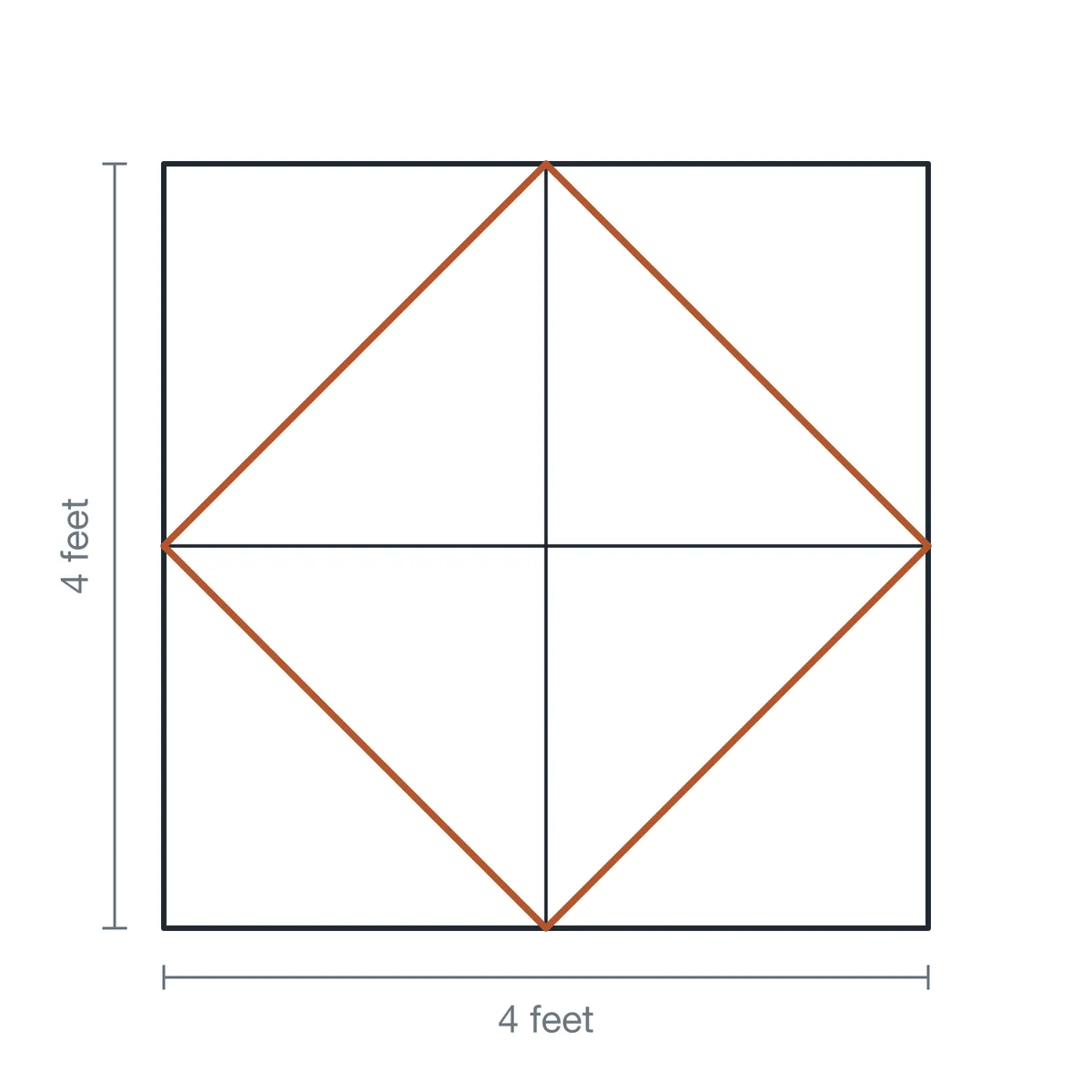
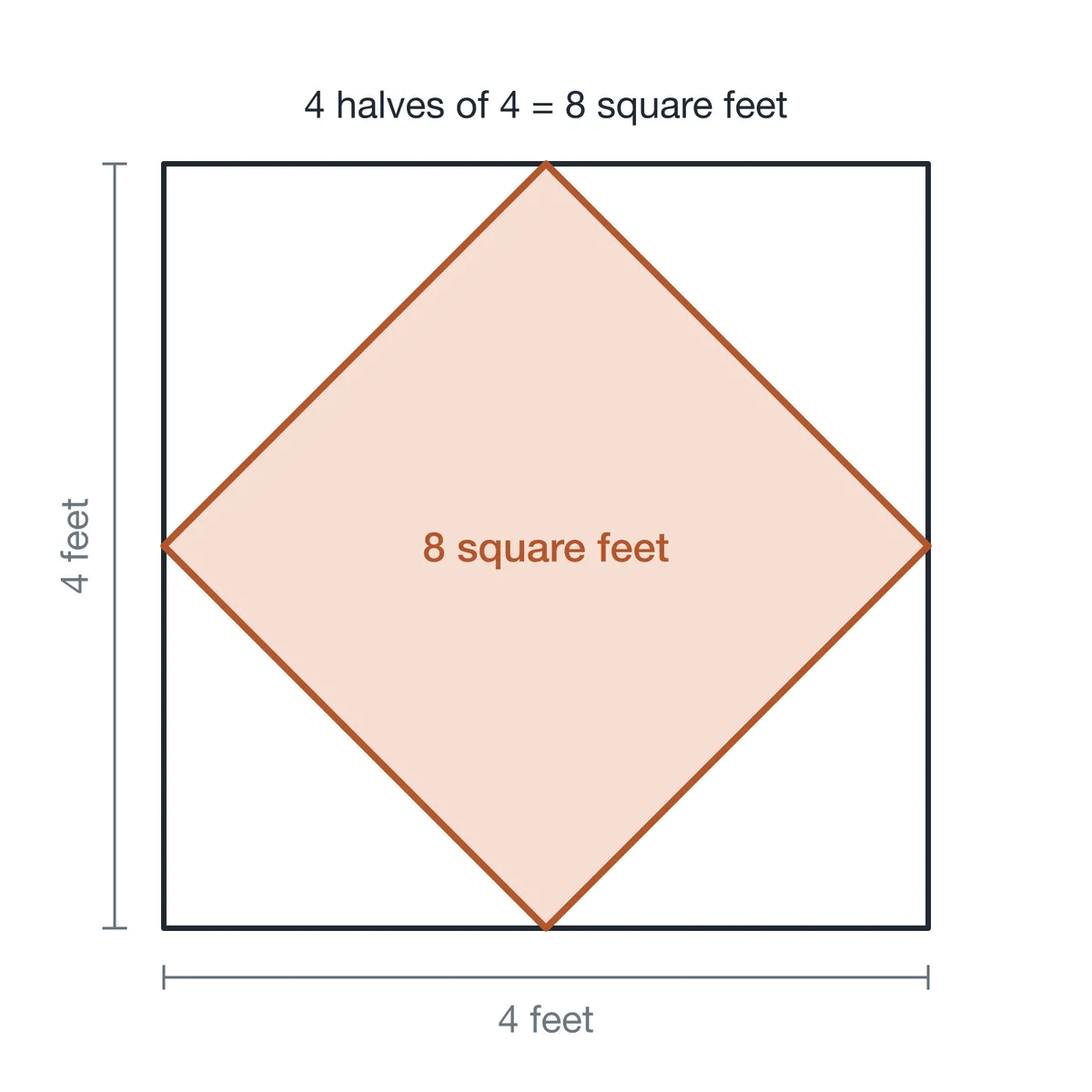
This leaves the boy confused, and keen to understand how he made his mistake, and what the side of an eight-foot square is. Socrates then proceeds to ask more pointed questions in order to lead him to the correct answer. The boy agrees that eight is half of sixteen, that sixteen is four squares of four, and that a diagonal cut in one of these squares of four halves its size. So by halving each of the four squares, the area that is left is also half, namely eight feet. And by drawing this as below, we have found the side of a square of area eight.
 |
 |
|---|
This feat of revealing knowledge in others, that seemingly wasn't there before, we now call the Socratic method - a way of teaching through questioning.
In medical training, the Socratic method is still going strong, especially in ward-based teaching. I was initially quite confused when I first got on the wards, excited to finally be learning real medicine, only to discover that I wasn't (seemingly) being 'taught' anything, just asked questions I didn't know the answer to.
It took me a while to understand the real value of this method. The Socratic teacher questions the student to understand what they know and what they don't know. The skill of the good Socratic teacher is then to ask a series of leading questions, moving the student from questions they can answer to questions they previously couldn't. When it's done well it's a very satisfying experience for both the student and the teacher. The student feels they 'worked it out for themselves'; the teacher is left satisfied that their student has a genuine understanding of the subject that has been taught.
The Socratic teacher knows the answers to the questions they ask. They lead the student in the right direction. The student will often give incorrect answers, but these incorrect answers help, telling our Socratic teacher what the student misunderstands, allowing them to ask a more focused question, that gets to the heart of the misunderstanding and leads the student to the correct answer.
When a student is just told the answer to a question, they lose the opportunity to answer it for themselves and this removes some advantages for everyone. At some point in history, someone was the first to think about a particular subject and understand it without a teacher. When you are just told the answer, it's much harder to think for yourself. Thinking for yourself is very different from remembering what you were taught. It prepares you for new problems, and for your own research.
And there's one more benefit of the Socratic method - one day, a student will give their teacher a better answer.
At every point in human history, the science of the day was waiting to be improved. There were better answers, waiting to be discovered. Even if these new answers are not acknowledged, the student is unlikely to dismiss their own idea just because the teacher tells them it's wrong. I think many scientists have been driven by these types of questions and it forms an important basis for 'The Structure of Scientific Revolutions'.
This is where I think, through the use of artificial intelligence, the Socratic method may get a new lease of life.
AI models are trained on countless books and sources of information. The trained model is static. It is a snapshot of everything that it has been trained on. The magic happens when it's asked questions.
Now imagine if Socrates had not actually known how to find the square root of eight. But he had some intuition as to the questions he should ask. If he had asked the boy the same questions as he did, he would still have got the correct answer. Now imagine if the boy being questioned possessed the sum total of human knowledge. This appears to be the research opportunity with AI. Its prior knowledge is vast. The value comes when it is asked the right questions and finds new answers, new knowledge.
The most remarkable example of this has been in mathematics - with new discoveries happening at an astonishing rate. The sciences will be surely be next.
Some of the new AI research appears to be unintelligible to humans, but we can now ask these models to explain it to us, and if we just ask the right questions, I am sure there are even better answers out there waiting to be discovered. I wonder, if Socrates were alive today, what new questions would he ask?